
Hemp and marijuana come from the same cannabis sativa family, but their unique biological structures result in significant differences.

Hemp
Contain 0.3% or less of tetrahydrocannabinol (THC)
Non-psychoactive
Known as ‘industrial hemp’ and is grown for a variety of commercial purposes
Rich in CBD and serves as the main source of commercial CBD products
Marijuana
Contains much higher levels of THC (up to 30%)
Psychoactive side effects
Mostly used for medical and recreational purposes
Bred to grow wider with more flowers containing higher THC level
CBD vs THC
CBD
Non-psychoactive (doesn’t get you high) 0.3% THC or less Loosely regulated Also known as Cannabidiol
THC
Psychoactive (gets you high) 0.3% THC or more Highly regulated Comes primarily from the marijuana plant Also known as Delta-9-tetrahydrocannabinol
Full Spectrum vs Broad Spectrum
There are various cannabinoid spectrum options to choose from, including FULL-SPECTRUM, BROAD-SPECTRUM CBD, CBD ISOLATE, and TERPSOLATE. While these four product types may appear similar, they are distinct from each other.
Full Spectrum
(Everything from source plant)
In the production of full-spectrum CBD products, manufacturers employ dried hemp plant matter for extracting cannabinoids. Typically, a supercritical CO2 extraction method is utilized to extract all the plant compounds, resulting in full-spectrum CBD oil that contains all the cannabinoids present in hemp.
Broad Spectrum
(Everything except THC)
Broad-spectrum CBD is essentially full-spectrum CBD but without any THC. It provides all the entourage benefits associated with full-spectrum CBD, ensuring that no THC enters the body. This makes it an ideal option for individuals who need to avoid any traces of THC in their system.
Endocannabinoid Recepters
CB1
CB1 Receptors are primarily found in the brain and central nervous system, playing a pivotal role in regulating various physiological processes, including mood, appetite, pain perception, and cognitive functions. To a lesser extent, they are also present in other tissues, where they contribute to the modulation of processes related to immune response and energy balance.
CB1 Receptors target:
Motor coordination Appetite Pain perception Immune cells Short term memory Motor activity Thinking
The two primary endocannabinoid receptors, CB1 and CB2, are pivotal components of the endocannabinoid system, which actively regulates a wide array of bodily functions. This system includes the management of appetite, sleep, anxiety levels, and cognitive functions and is intricately connected to both the nervous and immune systems.
CBD interacts with the extensive network of receptors in the body and plays a supportive role in numerous physical processes. By facilitating bodily balance (homeostasis), CBD, when binding to endocannabinoid system receptors, can trigger various therapeutic responses.
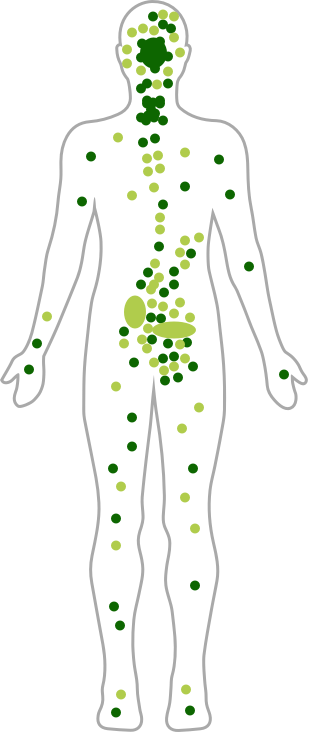
CB2
CB2 Receptors are mostly in the peripheral organs especially cells assocated with the immune system.
CB2 Receptors target:
Adipose tissue Immune cells Cardiovascular system Liver Central nervous system Bone Reproductive system Eye Immune system Respiratory tract Skeletal muscle Motor activity Kidneys Thinking Pancreas Tumors Skin Gut